
GM Crops and Food
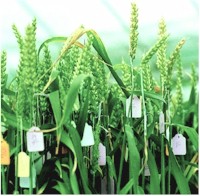
The introduction of GM crops and food has raised controversy around the world. Questions include whether GM crops will harm the environment or GM foods be damaging to health. Because the technology is currently largely in the private sector, there are also issues of how, and in whose interests, it will be used.
GeneWatch UK is working to ensure the authorisation process for GM crops and foods is rigorous and takes a precautionary approach. We are also campaigning for liability rules that will compensate farmers for contamination of their products and require the biotechnology industry to pay for putting things right if environmental harm arises from the use of GM organisms.
From this page you can find basic information about GM crops and food as well as more details about the areas on which GeneWatch works.
Most GM crops planted today (about 85% by land area) are genetically engineered to be resistant to herbicides (weedkillers). This is so that they can be blanket sprayed with weedkiller yet the crop will still survive. Most of the crops are so-called "RoundUp Ready" crops which are tolerant to the weedkiller glyphosate (brandname RoundUp). Information about problems caused by these herbicide-tolerant GM crops can be found here.
Resources
- GeneWatch reports
-
GeneWatch UK Executive Summary: Time for the end of GM/GE herbicide tolerant crops?
 6th September 2022
-
GeneWatch UK Report: Time for the end of GM/GE herbicide tolerant crops? (low resolution version)
6th September 2022
-
GeneWatch UK Report: Time for the end of GM/GE herbicide tolerant crops?
6th September 2022
- Third World Network (in collaboration with GeneWatch UK): Bt Crops Past Their Sell-By Date: A Failing Technology Searching for New Markets? (September 2022)
-
GeneWatch UK Executive Summary: Time for the end of GM/GE herbicide tolerant crops?
- Press articles
- The Conversation: How power shaped the 'success story' of genetically modified cotton in Burkina Faso (30th August 2020)
- Organic and Non-GMO Report: Non-GMO corn seed outperforming GM seed in field trials (27th December 2019)
- Huffington Post: Trump Administration Lifts Ban On GMOs, Bee-Killing Chemicals In Wildlife Refuges (3rd August 2018)
- Reuters: Nestle, Hershey at odds with farmers over U.S. GMO labeling (3rd July 2018)
- Food Processing: What Do Consumers Think of GMOs? (7th June 2018)
- GlobalEcoGuy: Zombie GMO Myths (17th April 2018)
- IPS: Genetically Engineered Disappointments (16th May 2017)
- RCI: Major food company going non-GMO (1st November 2016)
- New York Times: Doubts About the Promised Bounty of Genetically Modified Crops (29th October 2016)
- Nature: The race to create super-crops (18th May 2016)
- New York Times: Acreage for Genetically Modified Crops Declined in 2015 (13th April 2016)
- Nikkei Asian Review: Genetically modified crop cultivation plateaus in US (12th March 2016)
- Farm Weekly: Is GM running out of steam? (3rd August 2015)
- Iowa Farmer Today: Non-GMO premium draws growers (2nd April 2015)
- NutraIngredients: Fat fighting microbes? New study backs GM probiotic to supress obesity (23rd March 2015)
- Iowa Farmer Today: Farmer interest in non-GMO beans, corn grows (10th December 2014)
- Daily Mail: 'Don't be drawn into Frankenstein food experiments': Hollywood stars, academics and activists sign open letter to British public warning against GM foods (12th November 2014)
- Premieres Lignes: Transgenic Wars (1st September 2014)
- Ard Media Tek: Die Propagandaschlacht um die Gentechnik [in German] (8th July 2014)
- Reuters: U.S. GMO crops show mix of benefits, concerns - USDA report (24th February 2014)
- External links
- GMO Research
- Special Secretariat for Family Farming and Agrarian Development (Brazil): Transgenic Crops: Hazards and Uncertainties (2017)
- Center for Food Safety: National Academy of Sciences Finds Genetically Engineered Crops Not the Solution to World Hunger (23rd May 2016)
- Greenpeace: Twenty Years of Failure Why GM crops have failed to deliver on their promises (5th November 2015)
- GM Watch: Propaganda over facts? BBC Panorama and Bt brinjal (28th July 2015)
- Union of Concerned Scientists: Eight Ways Monsanto Fails at Sustainable Agriculture (March 2015)
- CBAN: Where in the world are GM crops and foods? (March 2015)
- Center for Food Safety: Debunking Popular Myths about GE Crops Portrayed in the Media (19th September 2014)
- Earth Open Source: 10 reasons we don't need GM foods (June 2014)
- Earth Open Source: GM foods neither safe nor needed, say genetic engineers (19th May 2014)
- Friends of the Earth Europe: Who benefits from GM crops? An industry built on myths (28th March 2014)
- Press releases
- Testbiotech and GeneWatch UK PR: Commission admits that toxic mixes in genetically engineered soybeans need to be assessed 19th January 2016
- GeneWatch UK and TestBiotech PR: Warning to EU Member States not to allow new genetically engineered soybeans with resistance to glyphosate for import 17th November 2015
- GeneWatch UK PR: GM wheat trial failure highlights poor GM success rate, need to invest in other R and D 24th June 2015
- GeneWatch UK PR: EU approval of new GM crop for import condemned for increasing use of toxic weedkiller 24th April 2015
- GeneWatch UK PR: Second-generation GM crops: an environmental disaster 15th October 2014
- GeneWatch UK PR: Supermarkets must wake up to environmental harm caused by imported GM feed 26th August 2014
- GeneWatch UK PR: Committee spreads misinformation about GM crops to be grown in England 30th June 2014
- GeneWatch UK PR: Paterson and GM industry work together to open England up to RoundUp Ready GM crops 8th June 2014
- GeneWatch UK PR: UK Government and GM industry collusion exposed 5th May 2014
- GeneWatch UK PR: Defra battles to keep public in the dark over GM industry influence on policy and media 14th April 2014
- Joint PR: Environment groups condemn Paterson's plans to plant RoundUp Ready GM crops in England 10th March 2014
- GeneWatch UK PR: GM potato research a waste of money 17th February 2014
- GeneWatch UK PR: Supermarkets must stop harm to Monarch Butterfly, end GM animal feed use 30th January 2014
- Testbiotech, GeneWatch UK and the Pesticide Action Network (PAN) PR: Stop risky herbicide 2,4-D (27th January 2014) 27th January 2014